
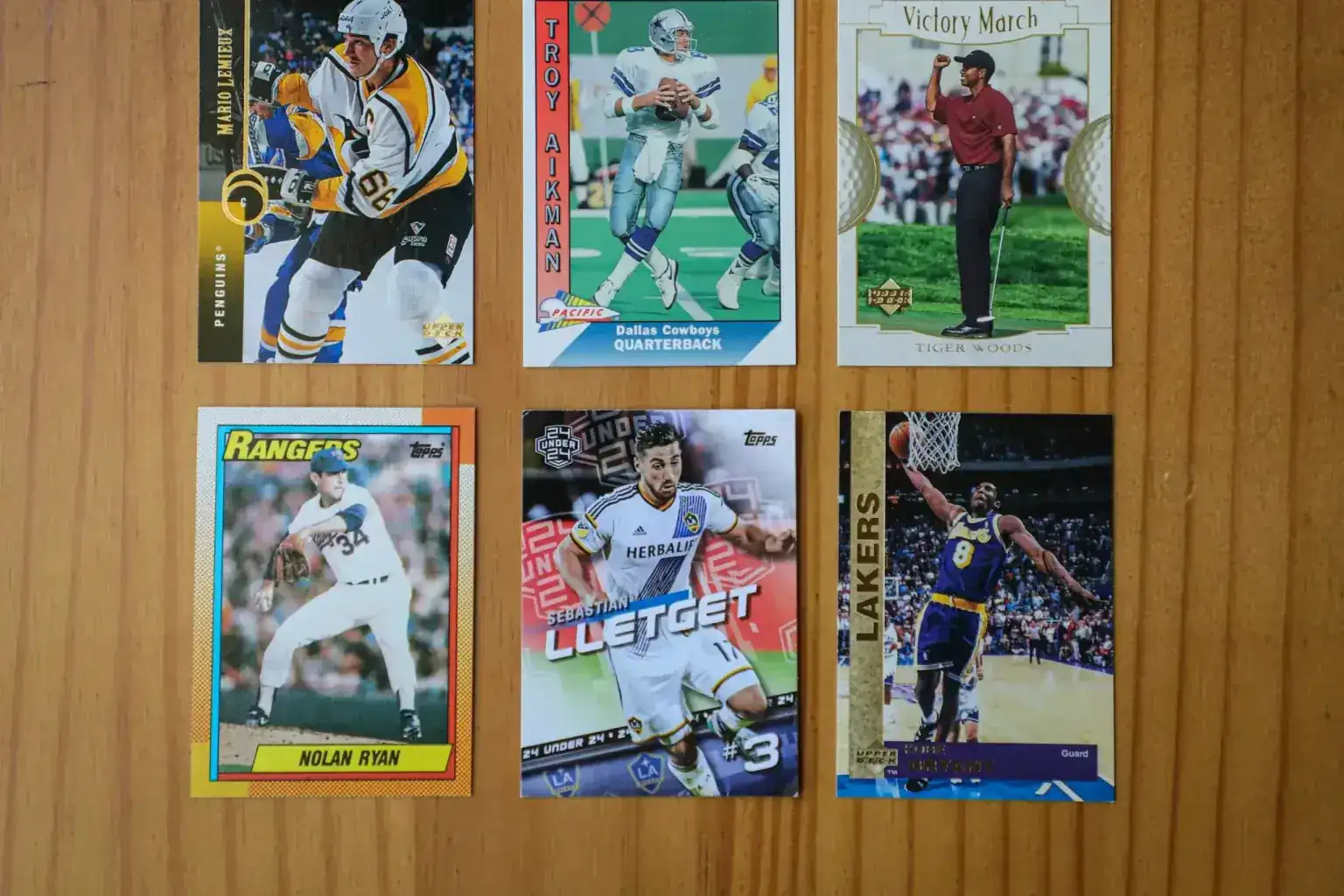

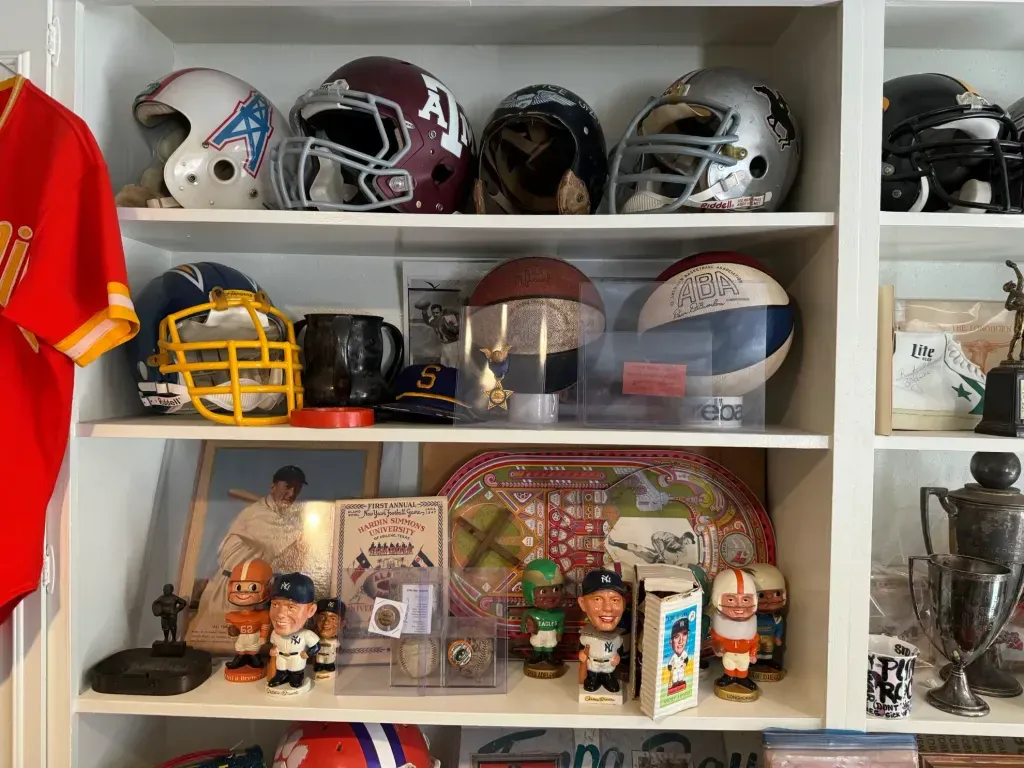
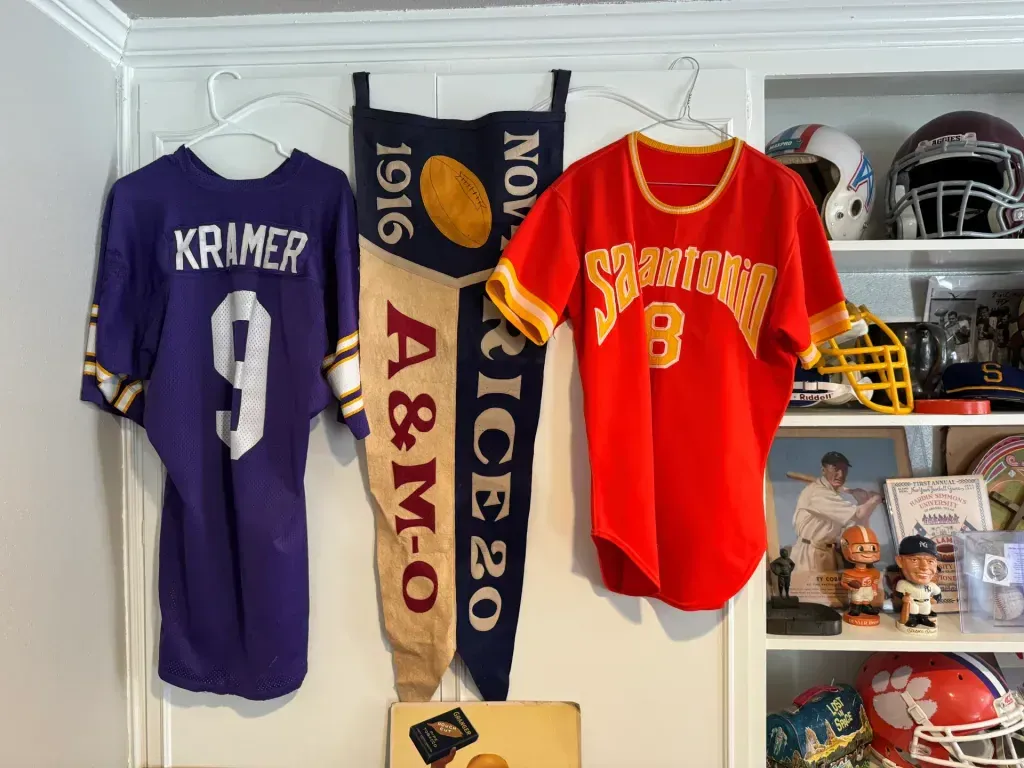
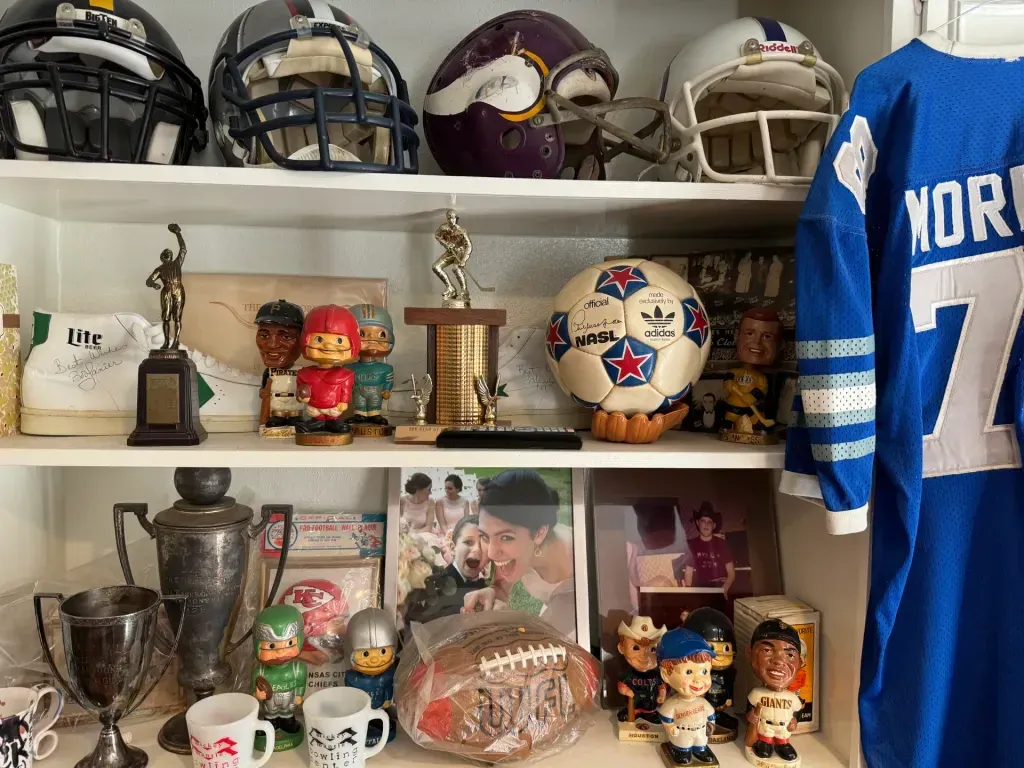
Vintage baseball card collection — a craftsperson working the top of a tall run of finished work

Jons StatsVintage Baseball Card Collection Buyer in San Antonio, TX

  • A written price before work startsEvery sell vintage sports memorabilia job is scoped and priced in writing.
  • Insured crews, direct answersYou speak to the people doing the work.
  • The site is left cleanContainment, floor protection and same-day debris removal on every interior job — the space stays usable while the work is going on.
  • Local to San AntonioCrews work San Antonio and the surrounding cities every week.
Sell autographed jerseys — warm morning light across expertly completed work in a home office

Jons Stats Jon's Stats buys vintage baseball card collections for cash across San Antonio, TX, handling everything from tobacco era cards through 1980s Topps sets. Whether you have a single graded PSA card or a complete vintage baseball card collection sitting in a closet, we make instant cash offers and handle the appraisal and payout directly—no consignment, no waiting months for a sale.

  • Sell Your Vintage Baseball Card Collection for Cash in San Antonio
  • Tobacco Era and Pre-War Card Collections We Buy
  • Golden Age and Post-War Sets We Purchase
  • 1940s Through 1980s Vintage Card Collections We Buy
  • Card Grading and Certification Explained
  • Determining What Your Collection Is Worth
Sell vintage sports memorabilia in San Antonio Tx — the completed work in a bright bathroom meeting clean tile

Sell Your Vintage Baseball Card Collection for Cash in San Antonio

The cash sale process starts with photos. Send images of your cards' fronts and backs, note any PSA grading, SGC certification, or other third-party authentication, and include a count of what you're selling. We review the submission and send a preliminary offer within 24 hours. If you accept, you can ship the collection or arrange an in-person appraisal at our San Antonio location. Once we inspect the cards, verify condition grades, and confirm PSA or SGC slabs match the serial numbers on the holders, we cut a check the same day.

Sell vintage sports memorabilia in San Antonio Tx — a finished doorway with a square reveal and flawless surfaces

Tobacco Era and Pre-War Card Collections We Buy

The T206 set issued 1909-1911 by American Tobacco Company remains the most sought vintage baseball card collection in the hobby. T206 cards carry design elements unique to the tobacco brand within the set—Sweet Cap, Piedmont, Sovereign, and 30 other brands printed different reverse sides on otherwise identical fronts. We also purchase T205 gold border cards and sweet cap tobacco cards from the same era. E90-1 American Caramel cards and T210 Old Mill Cigarettes cards date 1909-1911 and carry similar collector premiums.

Sell vintage sports memorabilia in San Antonio Tx — a hand pressed flat against newly completed work blending into its surroundings

Golden Age and Post-War Sets We Purchase

The 1948 Leaf set and 1952 Topps sets represent the transition to the modern card era. The 1952 Topps high-number series (cards 311-407) commanded premiums because those cards printed in lower quantities as production wound down. A 1952 Topps in high grade from that range can fetch 2-3x the price of a 1952 Topps common-player early-series card.

The 1960 Fleer Baseball Greats set and Diamond Stars issues from 1934-36 are sought by type collectors—hobbyists who collect one example of each design style across decades rather than pursuing complete sets. Type collecting strategy emphasizes rarity within each design era rather than completion of a single set. We value these collections higher when they're organized by era and represented by stronger condition examples.

Complete sets command higher premiums than partial lots because dealers and collectors actively seek set-break cards to finish their own collections. Team set breaks are frequent across all decades because collectors focus on one club rather than the complete set. A 1978 Topps team set or any regional subset carries negotiated value based on condition and star players included.

Sell vintage sports memorabilia in San Antonio Tx — a perfectly true finished edge with warm light grazing along it

1940s Through 1980s Vintage Card Collections We Buy

Cards from the 1940s-1950s era include Bowman issues and early Topps production. The 1975 Topps mini variation cards—smaller versions of regular cards printed as an experiment—carry premiums over standard cards from the same year. Centering issues were common in 1970s Topps print runs because registration tolerance was loose; a well-centered example can be worth 20-30% more than a poorly centered card.

The 1980s saw mass production, yet sealed wax pack cards and complete sets from that decade attract collectors seeking nostalgia. Wax packs are still sealed in original packaging and represent speculation on unopened content. We assess sealed wax packs conservatively because the cards inside are unknown. Opened 1980s Topps sets in strong condition move steadily; Hall of Fame rookie cards like a 1984 Donruss Don Mattingly consistently command premiums because demand stays steady and supply shrinks as cards age.

Sell vintage sports memorabilia in San Antonio Tx — a craftsperson holding a sample board of three finish options

Card Grading and Certification Explained

PSA grading is the most widely recognized third-party card authentication service. An encased card in a PSA slab lists the year, set, player name, and a numeric condition grade. SGC certification works the same way and predates PSA; older SGC slabs are highly sought because SGC was the standard for vintage card authentication before PSA launched. BGS grading (Beckett Grading Services) and CSG grading (Certified Sports Guarantee) also assign numeric condition grades and encase cards in tamper-evident holders. All four labs use the same 1-10 condition scale: 1 (Poor), 2 (Good), 3 (Very Good), 4 (Very Good-Excellent), 5 (Excellent), 6 (Excellent-Mint), 7 (Near Mint), 8 (Near Mint-Mint), 9 (Mint), and 10 (Gem Mint).

Antique sports memorabilia — warm low sun raking across the completed work to show how clean it is

Determining What Your Collection Is Worth

Set completion status drives pricing more than any single factor. A complete 1952 Topps set minus five cards might be worth 40% less than a verified complete set because those five missing cards are often high-numbers or tough finds. Partial sets still sell, but buyers expect a 30-50% discount.

Rare baseball card valuation depends on rarity, player recognition, and condition combined. A 1909-1911 tobacco card in PSA 5 condition costs 3-5x more than the same card in PSA 2. Rookie cards across eras carry 2-5x premiums over common player cards from the same year and set. Player-focused card collections of Hall of Famers like Mickey Mantle, Babe Ruth, or Willie Mays command higher per-card averages than mixed sets because dedicated collectors actively bid for specific players.

Budget-friendly entry points exist for new collectors. Common cards from 1952-1980 sets in lower grades (PSA 3-5) cost $5-50 per card and provide genuine vintage exposure without four-figure investments. Partial sets from the 1970s offer affordable ways to explore the hobby. Tobacco era cards with heavy wear still teach history and build foundational knowledge before buying high-grade examples.

Certificate in Of authenticity memorabilia — a craftsperson sighting along the finished work to check it is true

Spotting Counterfeits and Protecting Your Collection

Spotting counterfeits protects your collection investment. Re-cut or trimmed cards are the most common counterfeiting method—fraudsters take oversized reprints and trim them to match genuine dimensions. Check that all four corners show consistent radius curves; hand-trimmed cards display flat or uneven edges. Surface gloss and print registration also reveal reprints: genuine vintage cards show consistent ink dot patterns under magnification; reprints display registration shifts or blur at the edges of player photos.

Counterfeit detection methods include weight checks—authentic cards printed on thicker stock from certain eras feel noticeably heavier than reprints made on standard paper. Compare suspect cards side-by-side with verified examples; color saturation on reprints often appears too vibrant because modern inks are brighter than tobacco-era printing. Card backs are a reliable authentication checkpoint because counterfeiters often miss typographical details or spacing in checklist numbering.

Proper storage prevents condition loss before you sell. Acid-free sleeves and rigid topload holders protect against creasing and corner wear during storage and shipping. Maintain stable temperature and humidity—avoid basements prone to moisture swings or attics that cycle hot and cold seasonally. Humidity above 65% causes warping and gloss loss; fluctuating humidity accelerates deterioration faster than constant high or low levels. Storage and preservation techniques also include using archival-grade boxes and keeping cards away from direct sunlight and UV exposure.

What a vintage baseball card collection job includes

Sell Your Vintage Baseball Card Collection for Cash in San Antonio

The cash sale process starts with photos. Send images of your cards' fronts and backs, note any PSA grading, SGC certification, or other third-party authentication, and include a count of…

Tobacco Era and Pre-War Card Collections We Buy

The T206 set issued 1909-1911 by American Tobacco Company remains the most sought vintage baseball card collection in the hobby.

Golden Age and Post-War Sets We Purchase

The 1948 Leaf set and 1952 Topps sets represent the transition to the modern card era. The 1952 Topps high-number series (cards 311-407) commanded premiums because those cards printed in…

1940s Through 1980s Vintage Card Collections We Buy

Cards from the 1940s-1950s era include Bowman issues and early Topps production. The 1975 Topps mini variation cards—smaller versions of regular cards printed as an experiment—carry…

Card Grading and Certification Explained

PSA grading is the most widely recognized third-party card authentication service. An encased card in a PSA slab lists the year, set, player name, and a numeric condition grade.

Determining What Your Collection Is Worth

Set completion status drives pricing more than any single factor. A complete 1952 Topps set minus five cards might be worth 40% less than a verified complete set because those five missing…

Why homeowners call us

How Jons Stats runs the job

A written price before work starts

Every sell vintage sports memorabilia job is scoped and priced in writing, so the number you approve is the number you pay. If something behind the wall changes the work, we stop and price it first.

Insured crews, direct answers

You speak to the people doing the work, not a call centre, and cover certificates go to your building manager or general contractor on request.

The site is left clean

Containment, floor protection and same-day debris removal on every interior job — the space stays usable while the work is going on.

Local to San Antonio

Crews work San Antonio and the surrounding cities every week, so a walkthrough is usually available within the same week you call.

FAQ

Vintage Baseball Card Collection questions

What makes an old baseball card actually valuable?

Scarcity, player fame, and condition grade combine to set value. A 1952 Topps Mickey Mantle rookie in PSA 8 condition sells for significantly more than the same card in PSA 2 condition. Common players from scarce sets (1933 Goudey, 1909-1911 tobacco cards) hold value despite lower fame. Condition grade moves prices more than player name alone.

What years count as vintage for baseball cards?

Baseball cards pre-1980 generally qualify as vintage, though serious collectors focus on pre-1973 stock. The cutoff reflects shifts in production volume, card design, and collector maturity. Cards from 1981 onward exist in much higher quantities and are classified as modern.

What does it mean when a card is graded PSA, SGC, or BGS?

These are third-party authentication and grading labs that assign a numeric condition grade (1-10) and encase the card in a sealed slab. PSA grading is the most common modern standard. SGC predates PSA and is highly valued for vintage cards authenticated decades ago. BGS and CSG provide the same service. The slab certifies condition, prevents tampering, and makes resale easier because the grade is independently verified.

Should I sell my cards raw or get them graded first?

If your cards are already in SGC or PSA slabs, sell them graded—the condition is certified and you'll close faster. Raw cards are risky to grade yourself because grading costs $10-50 per card and a bulk lot of 100 raw cards costs $1,000-5,000 upfront. Selling raw to a direct buyer and letting them grade is smarter; we quote conditional offers pending our condition review and you avoid the upfront lab fee.

How do you figure out what a whole card collection is worth?

Add the individual card values based on set, year, player, and condition grade. Use sold-auction comparables for cards with PSA slabs—those prices are public. For raw cards, estimate condition grade conservatively (corner wear, centering, surface gloss) and apply a 20-30% discount versus graded comps. Subtract 30-50% from the total if the set is incomplete. Rookie cards and Hall of Famers command 2-5x premiums over common players from the same year and set.

How should I be storing my vintage cards to keep them from losing value?

Use acid-free sleeves and rigid topload holders to prevent creasing and corner wear. Store in a climate-controlled closet or cabinet at 65-70°F and 40-50% humidity—avoid basements, attics, and sunlit shelves. Keep cards away from direct light because UV exposure fades ink. For high-value cards, consider archival boxes designed for collectible storage. Never use PVC plastic sleeves or rubber bands; PVC degrades card surfaces and rubber bands crease cards over time.

Get a written price from Jons Stats

Call 726-237-8297 for a walkthrough, usually within the same week.